 English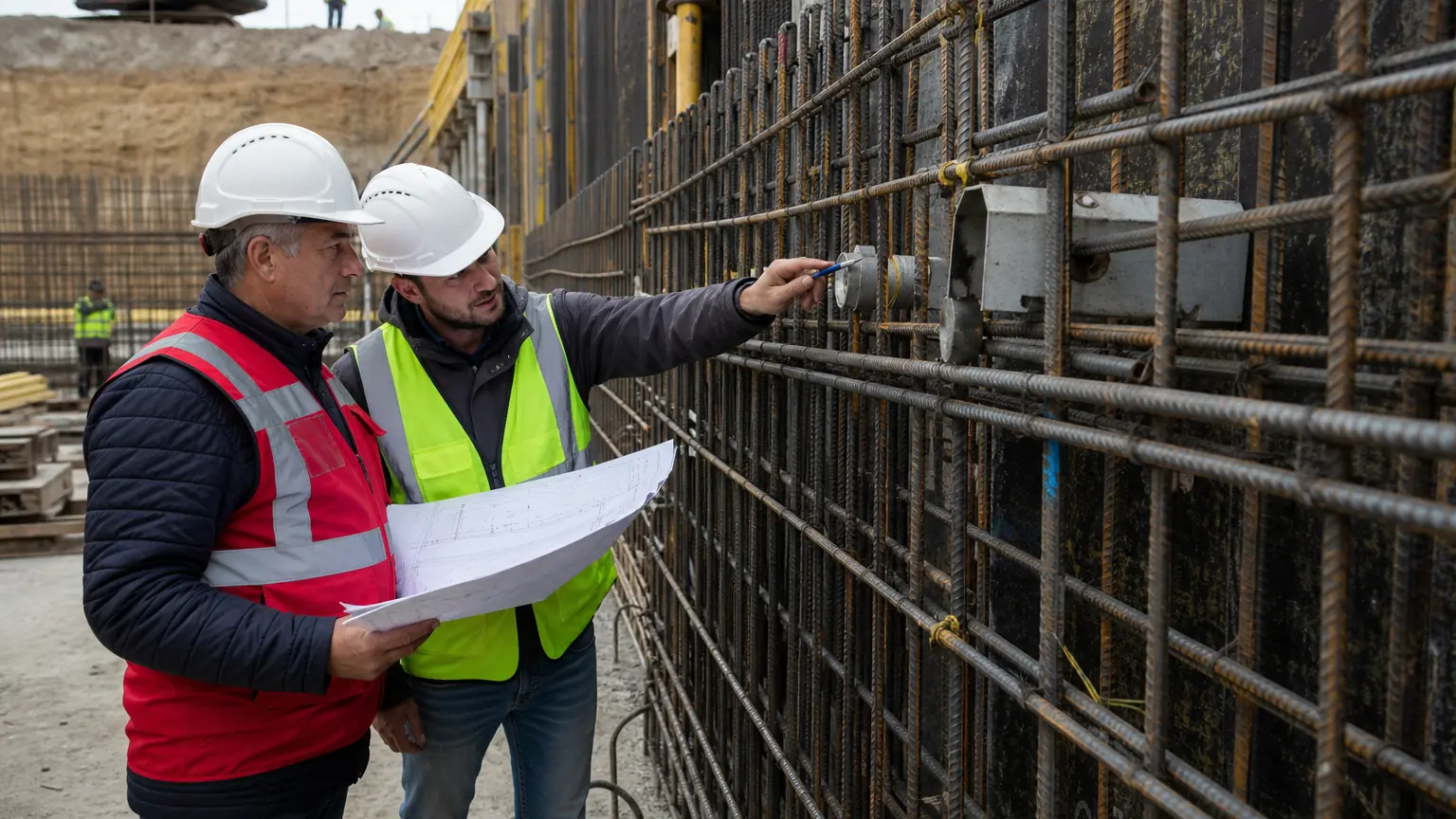
A construction record is most valuable on the day the event happens.
Months later, the same record may still support payment, handover or a technical investigation, but only if it identifies the work clearly and reflects what was actually observed. A form completed from memory cannot recreate a buried pipe, a concrete pour or the reason a detail changed.
This is where construction site supervision connects technical quality with project control. Drawings, inspection records, test results, quantities, instructions and photographs are not separate administrative streams. Together they explain what was authorised, what was built and why it was accepted.
A useful record answers five questions
What happened? Where? When? Against which requirement? What happened next?
If one of those answers is missing, the value of the record falls quickly. “Reinforcement checked” does not identify the element or drawing revision. A photograph without a location may show excellent work and prove nothing about the foundation under discussion.
Good records are specific without becoming essays. They use consistent element names, dates, references and status. They also distinguish observation from approval. A daily report can state that an activity occurred; a separate inspection or acceptance record may be required before the work is covered or included in payment.
E-SFlows provides construction site supervision, documentation validation and multidisciplinary coordination for infrastructure, civil works and utility projects.
The site must know which drawing governs the work
A technically correct detail can still create a defect if the team builds an obsolete revision. Drawing control therefore has a physical consequence.
The process should make the current approved information easy to identify at the point of use. Superseded copies need to be removed or clearly marked. Requests for information, designer responses and instructions should connect back to the affected drawing or specification.
Informal sketches and marked-up prints are often useful during discussion, but their status must be clear. If they change the permanent works, the appropriate designer and authorised parties need to review and incorporate the decision through the project’s formal process.
Inspection records should follow the construction sequence
Inspection plans are most effective when they mirror how work is actually built. Generic checklists tend to produce generic answers.
For a concrete element, the record may need to connect setting out, formwork, reinforcement, embedded items, pre-pour inspection, delivery information, test samples, curing and final observations. For a buried network, it may connect trench conditions, bedding, pipes, joints, levels, testing, survey and backfill.
The exact records depend on the design, contract and applicable rules. The principle is constant: evidence should be collected before the relevant condition disappears.
Nonconformity registers need decisions, not only numbers
A project can report that it has ten open nonconformities and still provide very little management information. One may be a minor documentation correction. Another may affect a critical structural element or prevent the next activity.
A useful register shows location, description, responsible party, immediate protection, proposed disposition, required approval, target date and verification of closure. It also identifies recurring causes. Five similar defects in different locations may reveal a method problem that deserves wider action.
Closure should mean more than receipt of a response. The agreed correction needs to be implemented and verified, with the final condition recorded.
Payment records should point back to the work
Quantity verification is stronger when it is built alongside construction rather than reconstructed at the end of the month.
Survey data, delivery documents, site measurements, approved drawings and inspection records can support different items. The correct basis depends on the contract. The supervisor needs to understand the measurement rules and distinguish between material delivered, work executed, work accepted and work eligible for payment.
This distinction becomes important for hidden work. If excavation, reinforcement or underground networks are measured only after covering, the evidence may be incomplete. Joint or timely measurement reduces later disagreement.
Professional supervision does not guarantee that every commercial difference disappears. It gives the parties a traceable technical basis for resolving it.
Materials need identity from delivery to incorporation
Product documentation is useful only if it can be connected to the product used in the works. Batch numbers, delivery dates, storage location and installation area may all matter depending on the material.
The European Commission explains that the EU Construction Products Regulation provides a common technical language for declaring and comparing construction-product performance. Its official CPR information is an important reference, while the project designer remains responsible for specifying performance appropriate to the intended use.
On site, documents should be reviewed with the approved specification, condition and intended location. A compliant label does not correct damage, unsuitable storage or installation outside the manufacturer’s stated conditions.
Photographs need structure
Site teams take thousands of photographs because it is easy. Finding the right one six months later is often difficult.
A practical naming or tagging convention should include the project area or element, date and subject. Photographs supporting an inspection should be linked to that record rather than kept only in a personal phone. Wide views establish location; closer views show the technical detail. A measuring scale or survey reference may be useful where size or position matters.
Images should be handled according to project confidentiality, data-protection and access rules. More photographs are not automatically better. Relevant, identifiable photographs are.
Design questions should remain visible until resolved
Requests for information often sit between design and construction. If responses are late, the programme may push the contractor toward assumption. If responses are unclear, different teams may interpret them differently.
A live register should show the question, affected location, date needed, responsible respondent and impact on work. Responses that change the design should follow the formal revision or instruction process.
For integrated infrastructure projects, access to the road design and bridge design teams can shorten the route from observed condition to coordinated technical decision.
The handover file is built throughout the project
Waiting until completion to assemble technical records usually reveals gaps when the work can no longer be inspected.
As-built surveys, test results, product information, approvals, inspection records, changes and operation or maintenance information should be collected and checked progressively. The required structure depends on Romanian law, the authorisation, project type and contract.
The current consolidated Law no. 10/1995 on quality in construction forms part of Romania’s legal framework and should be read with its amendments and applicable regulations. It includes quality verification, reception and the technical book of the construction within the wider quality system.
A complete handover file does not make a defective asset acceptable. It gives the owner the information needed to operate, maintain and later assess an asset whose quality has been controlled during execution.
What management should see each month
A useful supervision report should allow the client to understand the project without reading every site diary.
- work completed and the evidence available for it;
- critical inspections and tests performed or upcoming;
- open nonconformities ranked by impact and age;
- design questions and changes affecting time, quality or quantities;
- materials or documents awaiting approval;
- areas where work may be covered before inspection;
- records missing from the handover file.
The report should not create false certainty. If information is incomplete, that condition needs to be visible alongside the action required.
Frequently asked questions
Are site photographs enough to prove quality?
Not by themselves. They are strongest when identified by location and date and linked to drawings, measurements, inspection records or tests.
Who approves a design change discovered on site?
That depends on the change, legal roles and contract. The appropriate designer and authorised parties should review it through the established process; an informal discussion is not enough.
When should handover documentation be checked?
Progressively throughout construction. Missing records are easier to recover while the responsible team and the work remain accessible.