 English
 Română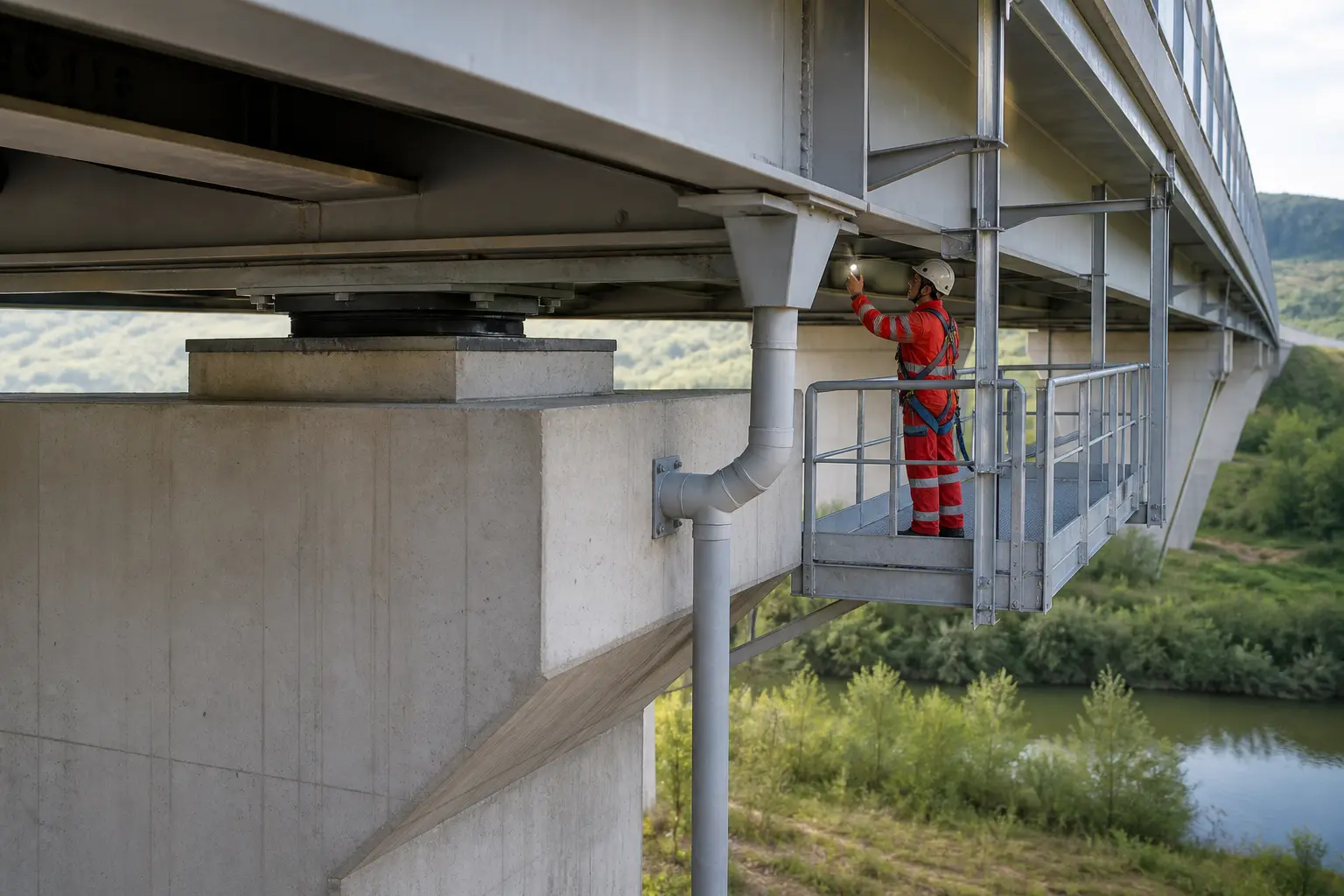
A structural model can calculate the bridge that has been described to it. It cannot decide whether that bridge is in the right place.
That decision begins earlier, when the project team is still looking at the road alignment, the obstacle to be crossed, the ground beneath the future supports and the way construction can reach the site. If those questions are left unresolved, a sophisticated analysis may simply produce a precise answer to the wrong problem.
This is the less visible side of bridge design. Before reinforcement, tendons or steel sections are selected, the team has to define a structure that fits the whole project. The best solution is not always the one with the shortest span or the lowest quantity on an early estimate. It is the one that brings geometry, foundations, water, traffic and construction into a workable arrangement.
First understand the crossing
A bridge is part of a route, but it is also a response to a particular place. It may cross a river, railway, road, valley, utility corridor or an area of weak ground. Each situation creates different constraints and different consequences if they are misunderstood.
For a river crossing, the team needs to understand water levels, flow paths, erosion and the effect of placing supports in or near the channel. Over a live road or railway, clearances and construction access can govern the arrangement. On a steep valley site, temporary access and lifting may be more difficult than the permanent structural design.
It is therefore useful to ask a simple question at concept stage: what must remain possible below, beside and above the bridge throughout its life? The answer includes traffic, water, inspection, maintenance and future changes, not only the opening shown on the first drawing.
E-SFlows develops bridge design solutions for road bridges, pedestrian bridges, access culverts and composite steel-concrete structures, coordinated with the wider transport project.
The concept is only as reliable as the information beneath it
Early drawings often look clean because the difficult information has not yet arrived. The terrain is simplified, the ground is represented by one line and existing services are absent. That can be useful for discussing options, but it should not be confused with certainty.
A sound concept normally develops from several sources:
- topographic and cadastral surveys covering the approaches and working areas;
- geotechnical investigations positioned for the possible foundations;
- hydrological and hydraulic information where water is involved;
- road geometry, traffic requirements and safety constraints;
- utility records supported by field verification where necessary;
- environmental, land and approval restrictions;
- realistic assumptions about construction access and sequence.
Not all of this information has to be complete before any idea is drawn. What matters is knowing which assumptions are temporary and which decisions depend on them. A concept that relies on unverified ground or an uncertain water level should say so clearly.
Span arrangement is a project decision
Choosing the number and length of spans affects more than structural efficiency. Fewer supports may reduce work in a river or beside live traffic, but longer spans can change structural depth, fabrication, transport and erection. More supports may allow a shallower deck, yet introduce additional foundations, bearings and maintenance points.
The shortest bridge may also create poor road approaches or difficult earthworks. Moving an abutment can improve the structure while making the adjoining road more expensive. These trade-offs are why road design and bridge design should not be developed in isolation.
Foundations can change the whole answer
From the finished road, foundations are almost invisible. During design and construction, they may be the part that carries the greatest uncertainty.
Ground conditions influence where supports can stand, how loads reach competent strata and how much movement the structure may experience. They also affect excavation support, groundwater control and the equipment that can work on the site. A foundation type that is structurally possible may be impractical if access is too restricted or if adjacent infrastructure cannot tolerate the installation method.
This is why investigation should follow the developing concept. Widely spaced boreholes may describe the general site but miss the variation at a critical pier or abutment. If the arrangement changes, the investigation plan may need to change with it.
A bridge succeeds or fails at its interfaces
Many bridge problems do not begin in the middle of the span. They begin where one system meets another.
Deck and approach
The road profile, structural depth and clearance beneath the bridge all compete for vertical space. At the ends, settlement differences and drainage need careful treatment. A smooth line in the model must become a comfortable, durable transition for traffic.
Structure and water
Bridge drainage should move water away without staining or damaging structural surfaces, discharging onto traffic or concentrating erosion. At watercourses, the foundation and channel protection need to be considered together.
Bearings, joints and access
Components that permit movement also need inspection and eventual replacement. If jacking positions, working space and safe access are not considered in the original layout, a routine operation can become a major intervention.
Utilities and structural zones
A service crossing may appear small beside the bridge, but its supports, openings, thermal movement and access can conflict with reinforcement, diaphragms or inspection paths. The route should be agreed before details become congested.
The bridge has to be safe before it becomes complete
The final structural form may be stable and efficient, while the stages used to reach it create very different forces and risks. Girders may be vulnerable before bracing is complete. A concrete deck changes stiffness as pours progress. Temporary supports can attract loads that do not appear in the final arrangement.
Construction method therefore belongs in the design discussion. The team should understand how elements arrive, where cranes or launching equipment can stand, which roads remain open and what temporary states require checking. The contractor may later refine the method, but the tendered design should not depend on an operation that the site cannot support.
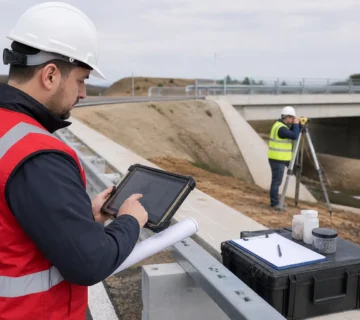
During execution, construction site supervision helps verify that materials, geometry, reinforcement, connections and recorded changes remain consistent with the approved requirements.
What the structural model should receive
Once the concept is sufficiently mature, analysis becomes far more valuable. The model can represent a defined geometry, credible support conditions, construction stages and the actions relevant to the project.
European structural design is built around requirements for safety, serviceability and durability. The European Commission Joint Research Centre explains that EN 1990 provides the basis for structural design and verification and is used with the material and action Eurocodes. The applicable standards, National Annexes and project requirements must be confirmed by the qualified design team.
A model is not evidence that all important behaviour has been captured. Engineers still have to challenge its boundary conditions, load paths and sensitivity. The most useful checks often begin with plain questions: where does this load go, what restrains this movement and what changes during construction?
Questions to settle before detailed bridge design
- Is the road alignment and vertical profile stable enough to define the crossing?
- Are the required clearances and future uses below the bridge confirmed?
- Do investigations cover the likely support positions?
- Are flood, scour, drainage or erosion risks understood where relevant?
- Can the proposed elements be transported, lifted or launched at this site?
- How will the bridge be inspected, maintained and eventually repaired?
- Which assumptions remain open, who owns them and when must they be resolved?
These questions do not delay structural design. They give it a reliable starting point.
Frequently asked questions
When should a bridge engineer join the project?
While route and crossing options can still change. Early input helps connect structural feasibility with clearances, ground conditions, water, land and construction access.
Can a bridge concept be prepared before all investigations are complete?
Yes, provided assumptions and uncertainties are stated. Investigation can then be targeted at the options and support locations that matter.
Does E-SFlows design culverts and pedestrian bridges?
Yes. The service includes road bridges, access culverts, pedestrian bridges and composite steel-concrete solutions, with scope agreed for each project.